
by Prodigy Clean Energy
May 1, 2026


VIENNA, AUSTRIA -- At the invitation of the International Atomic Energy Agency (IAEA), Prodigy Clean Energy chaired the recent IAEA International Project on Innovative Nuclear Reactors and Fuel Cycles (INPRO) Technical Meeting on Deployment Models for Transportable Nuclear Power Plants (TNPPs). Held in Vienna from April 27-30, 2026, Prodigy provided strategic regulatory and technical expertise at the meeting, with its VP of Innovation and Regulatory Affairs, Marcel Devos, moderating the proceedings.

As a recognized global frontrunner in TNPP infrastructure, Prodigy was well-positioned to lead discussions across the four day event.
The IAEA INPRO Technical Meeting collected and structured information about TNPP Deployment Models that can be implemented today, versus those potentially more applicable in the long-term. Discussions were agnostic to reactor technologies, stressing models and scenarios achievable within existing regulations and using existing practices. The use of nuclear reactors for vessel propulsion was excluded from the scope of the meeting in order to focus on stationary-deployed TNPP facilities that can be used to generate energy (i.e., power plants) at a specific site for an extended period of time.
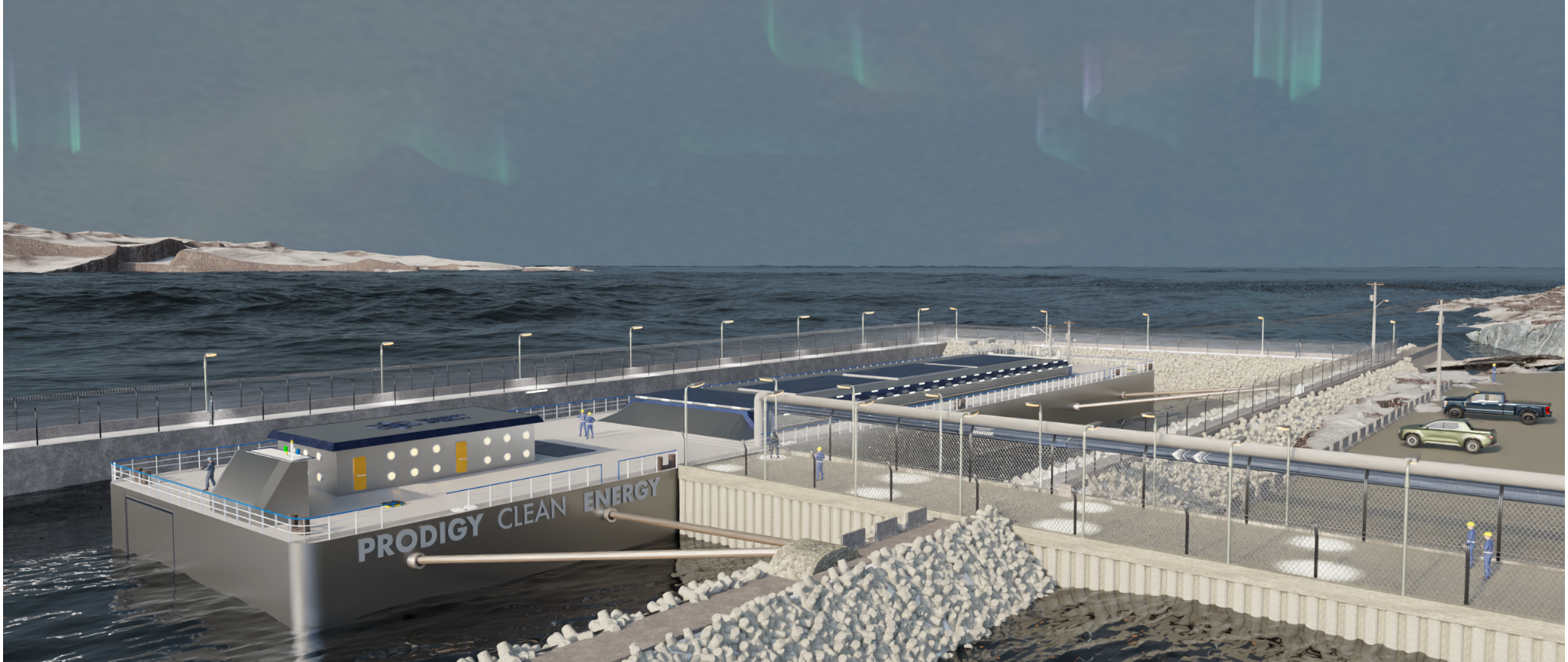
No. Prodigy’s TNPP is neither a ship nor barge. It is not self-propelled or navigable, and is instead dry transported as cargo to and from the deployment site. Once at its intended location, Prodigy’s power plant is secured in place at the shoreline either in a marine enclosure or on land. From a marine classification perspective, Prodigy’s TNPP has more in common with an offshore platform.
In Vienna, a large contingent of Member States, some deploying and preparing to export TNPPs (Technology Exporting Countries), and others considering imports of TNPPs (Technology Receiving Countries), attended the meeting, providing national updates and reflecting on the use of TNPPs to accelerate nuclear energy deployment in their jurisdictions.
Prodigy showcased its TNPP deployment model, funded in part by the Government of Canada’s NRCan Enabling SMRs Program, and highlighted progress on a full-scale Canadian TNPP Pilot Project, leveraging Canada’s existing nuclear regulations and a domestic framework amenable to adopt mature practices from the offshore marine sector for the safe and secure operation of nuclear power plants. Because Canada’s regulatory requirements closely align with the IAEA safety and security framework, Prodigy’s TNPP Deployment Model and the pilot project will serve as repeatable blueprints to implement TNPPs across IAEA Member States globally.
With the excellent convening support of the IAEA Scientific Secretariat and Technical Staff, Marcel from Prodigy delivered the meeting’s Keynote Address; provided stewardship of the meeting’s objectives and structure; guided the flow of plenary sessions, supporting synthesis of key technical, regulatory and deployment‑focused insights; and worked with the IAEA to consolidate and present the meeting’s principal conclusions and recommendations.
